
Description
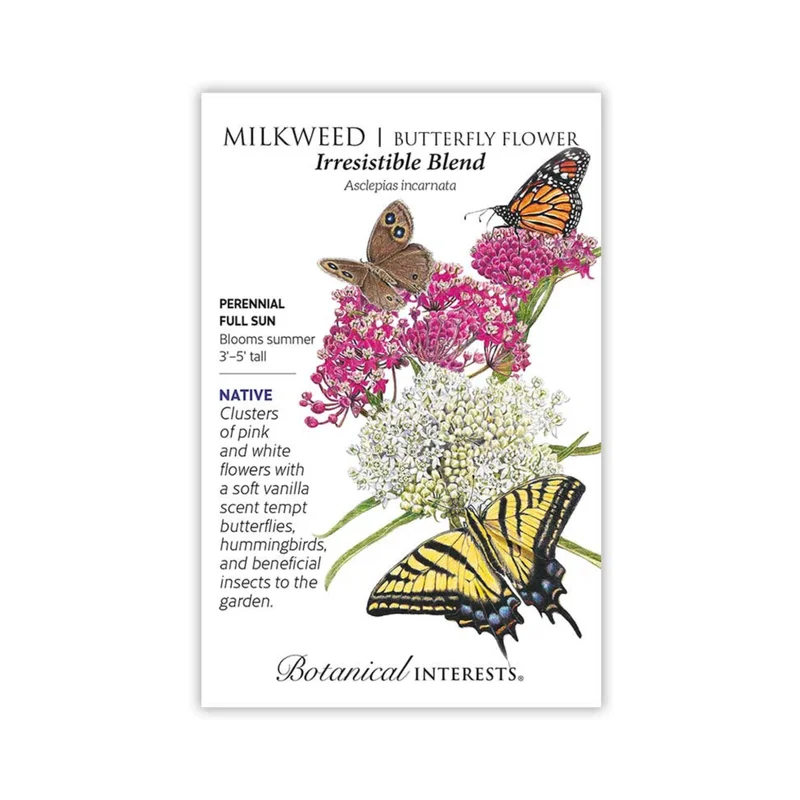
Butterflies and hummingbirds will flock to your garden to feast on the sweet nectar of this easy-to-grow, heirloom perennial. Often called swamp milkweed, this species grows best in moist or wet soils, such as near a pond or stream, but the loosely-clumped plants also grow well in a garden with regular watering. Decorative seed pods are beautiful in dried arrangements. Sap is toxic; avoid eye/skin contact and do not ingest.
Variety Info
- Family: Apocynaceae
- Native:Eastern ⅔ of the U.S. and Canada
- Hardiness:Perennial in USDA zones 3-6
- Exposure: Full sun
- Bloom Period:Summer
- Plant Dimensions: 2’–4′ tall on average but may reach as tall as 6′
- Variety Info: Individual flowers ½” long, borne in pink or white clusters
- Attributes:Attracts Butterflies, Attracts Pollinators, Cut Flowers, Deer Resistant
Sowing Info
- When to Sow Outside: 2 to 4 weeks before your average last frost date, or in the fall for spring germination.
- When to Start Inside:6 to 8 weeks before your average last frost date.
- Days to Emerge:14–28 days
- Seed Depth: ¼”
- Seed Spacing: A group of 3 seeds every 16″–36″
- Thinning: When 3″ tall, thin to 1 every 16″–36″
Growing Info
- Harvesting: For longest vase life, cut flowers when 1/2-2/3 of petals are open. Sear the stem end with a flame to prevent the sap from sealing the stem. Wear gloves; milkweed sap can cause skin and eye irritation and can be toxic if ingested.
Reviews
There are no reviews yet.